Powered By Blogger

Thursday, 22 October 2020

Okami Review

Okami is a 3D action adventure game developed by Clover Studios and published by Capcom in 2006, originally for PS2 but since then ported to all major platforms -- including the Switch, on which I played it. The player controls a wolf-god called Amaterasu as she attempts to release a fictionalised Japan from the clutches of an evil god.


Most notable about Okami is its cartoonish (but not cartoony) cel-shaded visual design, which takes inspiration from Japanese art. Early versions of Okami had a more traditional 3D action game aesthetic, but the game suffered from performance issues. Necessity being the mother of invention, the developers switched to a less graphically intensive cel-shading approach, which both solved the performance issues and provided Okami’s most memorable feature.


Before and after of Okami's art direction [Source: Wikipedia]

Cel-shaded games often have been cartoony, such as Borderlands, or taken direct inspiration from comics -- see XIII and the “BAM!” and “BOOM!” that accompany its gunshots and explosions. Okami decidedly isn’t like that, borrowing instead from the Japanese Classical Yamato-e style of artwork. Maybe it would be snobbish to say this is somehow better than Borderlands’ and XIII’s 20th century American comic inspiration, but Okami’s visuals are certainly unique among videogames, and refreshing for it.


Clover Studios leant into Okami’s new artistic aesthetic by adding a unique and complementary gameplay feature: the Celestial Brush. The Celestial Brush allows the player to defeat enemies by turning the screen into a canvas and painting lines and patterns on it. A horizontal line forms a slash attack, an inverted “Q” shape drops a bomb, and a loop produces a powerful wind, among many others. The system also has non-combat uses, such as drawing lily pads to cross bodies of water, fixing bridges, and restoring leaves to trees; and is incorporated into the storyline in a satisfying way.


On the PS2 original the brush mechanic could be cumbersome, slowing down combat due to the ponderous nature of drawing with an analogue stick. On the Switch, however, the mechanic is revolutionised by the device’s touchscreen, allowing the player to draw brushstrokes as quickly as it takes to swipe a finger. I had some issues getting the game to recognise my brushstrokes and sometimes it struggled with interfacing the 2D canvas with the 3D game world, but overall it’s a great feature that enriches combat and exploration.


Celestial Brush in action [Source: PCMag]

Okami’s single-player campaign is its only game mode: no co-op, online play or anything else. Thankfully, it is massive. I finished it in about 35 hours, a satisfying length, and only realised after completion that I’d missed huge chunks of side quests, minigames and collectibles, which would have added another couple-dozen hours. Okami’s storyline, divided into three arcs, is a bit haphazard. The first arc is a well-realised, self-contained story about defeating an evil eight-headed being that preys on a small village. The second and third arcs see the scope of the story expand considerably but it becomes less cohesive. Friends and foes come and go in a blur as the plot lurches from one catastrophe to the next.


Clover’s desire to tell a sweeping epic folktale saddles Okami with an almost crippling quantity of dialogue, which is by far the game’s biggest flaw. There is simply far, far too much talking. Some can be sped-up by holding (A) but plot-critical dialogue trundles slowly across the screen and lasts for minutes at a time. You can skip it entirely but doing so risks missing key info. The whole script needs a severe edit: Even talking to one of the games many merchants, for instance, produces about ten lines of pointless chitchat before you are offered to buy something. Compounding matters is that there are really only two good characters among dozens -- Susano, a doofus warrior from an old bloodline, and Waka, a mysterious French-speaking prophet whose role as good or evil is uncertain until the end.


Amaterasu, the wolf you play as, does not speak; instead your talking is done by a little forest sprite called Issun. Issun, unfortunately, suffers terribly from bad writing. Not only are his colloquialisms annoying, but he’s also a pervert. Despite being a notionally sex-less story about a wolf fighting monsters, Okami still finds a way to include a teenagerish sexism that so often marrs ‘00s videogames. Most of the women characters in Okami wear revealing clothes; one in particular who plays a major role in the second arc is referred to by Issun as the “busty babe” and has her own boob physics. Issun is repeatedly and groan-inducingly awestruck by the game’s five or six beauties and the game hits a low point when you have to steal the robe of a princess bathing under a waterfall. It’s disappointing that the script and story don’t match the maturity of its art direction.


In terms of gameplay, Okami is overtly inspired by the Legend of Zelda series. The player steadily unlocks new areas that it is free to explore and contains multitudes of discoverables. The game’s main plot events take place in dungeon-style areas, and these are varied and interesting, although not matching the sophistication of the best Zelda dungeons. Each introduces one of thirteen Celestial Brush techniques, which Amaterasu works to unlock across the game. About half are environmental techniques that help you traverse and restore nature to the world; and half are fighting techniques. Amaterasu’s use of the Brush techniques are limited by an ink-o-meter, preventing the player from spamming battles with them.


In typical Capcom fashion Okami features a well-developed combat system. It combines various weapon types, unlockable tricks, dodge and block mechanics, combo bonuses and single-use power-ups to rich effect. Monster encounters take place exclusively in circular arenas that spring up around you (boss battles occur in larger designated arenas, but they're still circular). Enemies are varied, from the relatively straightforward imps of the first arc to tough elemental creatures of the later stages. Unfortunately, the fighting isn’t particularly difficult and I was never required to develop my skills much beyond hammering attack and learning a few enemy-specific Celestial Brush techniques. I completed Okami without dying once, in fact, leaving a lingering sense of waste that mastering the deep combat is ultimately inessential.


Fighting an imp in a virtual arena [Source: Siliconera]


Dialogue aside, the pacing of Okami is excellent. Its missions are engrossing and the player's attention to the main quest is constantly tested by innumerable side quests, collectables and minigames. With each save the game tracks total play-time, and I would find myself astonished when it would inform me that another 40 minutes of my life had slipped frictionlessly by. I regret ploughing determinedly through the main quest; once you enter the final area your opportunity to explore Okami’s world is locked off. The biggest miss was a series of combat arenas that pit you against wave after wave of increasingly tough monsters -- I saw none of that. I also missed all-but one of the eleven secret Celestial Brush techniques and all the non-essential special items. On the one hand it’s irritating that so much material is superfluous, and at times Okami even discourages it: in one area full of side quests you’re explicitly told not to forget about your mission; and at a certain point in the plot when the game wants to create a sense of urgency it bars you from taking on side quests. But on the other, I accept I could have been more curious, basically.


All told, Okami is if not quite the all-time classic it’s sometimes feted to be, then at least among the finest examples of PS2-era action adventure games. Tighter plotting and writing and difficulty would elevate it close to Jak II levels of excellence, but for the £7 I paid on the Switch Store I’m satisfied I got more than my money’s worth. 

Wednesday, 3 June 2020

Clueless Soup: One Man's Journey Into the Heart of the '90s Teen Comedy Boom


Clueless' Pop Up Experience To Celebrate 25th Anniversary Of Film ...


In 1995, Amy Heckerling’s Clueless was released, revitalising the teen-comedy genre for the ‘90s. Clueless was a reasonable commercial and critical success but had an outsized impact on its genre. For the half-decade or so following its release, cinemas were flooded with imitators, to the extent that teen comedies released in that five-year period, of which there were dozens, can be more accurately described as being part of the Clueless genre.

The recipe for what I’m going to call “Clueless Soup” consists of nine key ingredients. Various Chefs du Cinema (aka directors) either stuck closely to the recipe or put their own spin on the soup, adding or subtracting ingredients. Despite the relative straightforwardness of the recipe, results varied wildly. The Clueless Soup recipe is thus:

Clueless Soup

Ingredients:

1 work of classic literature
1-3 budding stars
A sprinkling of rich teens
A makeover
Soundtrack comprising recent pop/indie hits
A dash of female empowerment

Method:

Chuck together in a Californian high school, season with zingy one-liners and generous laughs to taste, and simmer for 90 minutes.

Note: this recipe has a use-by date of December 2001, after which the ingredients may grow stale.

*

Films made according to the Clueless Soup recipe include: 10 Things I Hate About You; Cruel Intentions; Drop Dead Gorgeous, She’s All That, Whatever It Takes; Never Been Kissed; Get Over It; Princess Diaries; Bring It On; She’s The Man; Election; and Legally Blonde.

Some, such as 10 Things I Hate About You, were perfect (re)creations, nailing the ingredients, flavour and textures of Clueless Soup; others, such as Whatever It Takes, followed the recipe closely but nevertheless cooked up a disaster; and others, such as Legally Blonde, used an incomplete set of stale ingredients but created something flavoursome anyway.

In need of a project during lockdown, I decided to gorge myself on a banquet of Clueless Soups with the goal of becoming a true connoisseur of the dish. Ingredients highlighted in bold throughout. But first, Clueless itself.


Cher Horowitz (film) / Gallery | Clueless Wiki | Fandom
Paul Rudd's first film and he's not aged a day since

Clueless (1995) - A+


Like The Good, the Bad, and the Ugly, The Godfather and Psycho, Clueless is a genre-defining classic. Not the first of its genre, but the film that crystallises its genre’s key elements and becomes its point of reference.

Clueless draws on Jane Austen’s Emma, a novel whose themes and moods still resonate today. There’s something fitting about adapting old books for an audience of teens who are probably trudging through said book in English class themselves. Of course, adapting a classic for a young audience is fundamentally dorky, and brings to mind your English teacher going, “Twelfth Night’s supposed to be funny!” to a sea of blank faces. But equally, done right, as it is here (and elsewhere in this project), adaptation can bring out and dust off the universal themes that made the novel in question a classic in the first place.

Like Emma, Cher Horowitz (Alicia Silverstone in her breakout role) is a bored, headstrong, wealthy girl who uses her position near the top of the social hierarchy to meddle in the lives of others. Regency England translates well to a Californian high school setting, both being governed by rigid social hierarchies, rules and codes. After taking newcomer Tai (Brittany Murphy) under her wing and giving her a makeover, Cher discovers there are limits to her influence and that her judgement is clouded by preconceptions; that she is, in fact, clueless.

But it’s not the storyline that makes Clueless a classic, rather the foundation that allows Amy Heckerling to build its iconic aesthetic. Clueless’ immensely quotable script is a gem, especially the early scenes that sketch out Cher’s character. From her debate class monologues (“It does not say RSVP on the Statue of Liberty!”) to her fashion critiques (“She’s a full-on Monet!”), the script keeps on giving.

Clueless is also a jab at conventions and preconceptions. Grades are the measure of intelligence; girlishness equates to stupidity: these are the twin themes that Clueless dismantles.

Cher isn't smart in a conventional sense, so instead of studying, she sets about improving her average grades by manipulating her teachers. By understanding motivations, interpersonal relations, and social capital she talks various teachers into bumping up her grades. Cher’s dad, a rough and ready hard-nosed litigator who represents a kind of real-world smarts, is thrilled, and is ultimately more impressed by her novel approach than he would have been otherwise.

Soft skills are equally valid -- if not more -- as forms of intelligence in the workplace as educational attainment. After all, most jobs only require a small amount of hard knowledge. Communicating, influencing, and improvising are the bread and butter of work. And that’s what Cher represents.

In the same way, Clueless itself is a response to the kind of consensus that resulted in the IMDb top 100 containing almost entirely serious-minded, brooding films catering to a guy-ish sensibility. It’s not that they’re bad -- at all -- it’s more that the consensus is so overwhelming it suffocates. Clueless’ aesthetic is exactly the kind to be passed over by the IMDb crowd as a superficial pleasure for an unserious audience: colourful, quippy, feminine, and occupied with love, relationships, and fashion. But it’s still quote-unquote proper cinema, with a rich filmic language, memorable characters, an irrepressible sense of humour, and something to say.

And it’s that impulse -- exploring a neglected, often maligned corner of cinema -- that drives this project. That, and spending time with my girlfriend during lockdown. Onto the rest...


Whatever It Takes: Latest On Netflix! Cast, Nominations, And Critics
Not my fave

Whatever It Takes (2000) - F


The worst possible start. I had high hopes: Whatever It Takes is adapted from Cyrano de Bergerac, which to be honest I hadn’t heard of but it sounds serious; features early roles for now-big names such as James Franco and Aaron Paul; and features all the classic high-school trappings. Unfortunately, Mark Schwahn, who wrote and produced this thing and shoulders the blame, concocted something hateful and poisonous. I had to turn it off about a third of the way in.

Anyone with any doubts about the validity of the feminist movement should watch this appalling film. The set up is this: James Franco’s jock and Shane West’s dweeb team up to help the other lay the other’s respective closest female friend. Outright manipulation is presented as romantic japes and bullying is presented as a legitimate dating tactic. The girls are 2D and the boys are gross. One particularly awful scene has West’s character pay the janitor so he can sneak into the girls’ locker room to perv, and it’s POV shot makes you feel like a pervert too. I don’t want this project to be just lamely pointing out ways old films don’t meet today’s standards but it’s unavoidable with this one. Thank god we're beyond this now. Puke.



Drop Dead Gorgeous,” Which Is Finally Streaming, Is Possibly My ...
Your Sarah Rose Cosmetics Mount Rose American Teen Princess Pageant winner!

Drop Dead Gorgeous (1999) - B+


Up second was Drop Dead Gorgeous, which deviates from the recipe in that it’s not an adaptation and it’s not set in a high school, or even in California. Reviews upon its release were mixed but its idiosyncrasies have earned it a cult following in the years since.

A mockumentary about a Minnesotan beauty pageant marred by fatalities, Drop Dead Gorgeous has a stunning cast that includes Kirsten Dunst, Denise Richards, Brittany Murphy, and Amy Adams. Various moms and aunts get juicy roles, too. A deadpan and sometimes absurdist sense of humour is complemented by a bizarre plot that doesn’t conclude at its seemingly natural end point. The judges of the beauty pageant, including an old pervert (a recurring theme here…) and a “retard” are the film’s weak points -- none of their lines land. This soup deviates from the recipe significantly but is nonetheless extremely enjoyable, in an unexpected way.


I always wanted someone to serenade me on a football field, just ...
You could never

10 Things I Hate About You (1999) - A+


The yin to Clueless’s yang, 10 Things is a classic entry in the teen comedy genre. Where Clueless is clever, original, and empowering, 10 Things is traditional, romantic, and gooey. Adapting The Taming of the Shrew, Heath Ledger’s misfit Patrick is recruited by slick Joey, who in turn is recruited by Cameron (Joseph Gordon-Levitt), to woo Julia Stiles’ Kat, an outspoken rebel.

The schmaltz is heavy but strong set pieces, including a famous stadium serenade scene and the titular sonnet, well-written characters and a dreamy Heath Ledger in his breakout role keep things moving.

With each and every key ingredient present, 10 Things I Hate About You is a true gourmet soup.
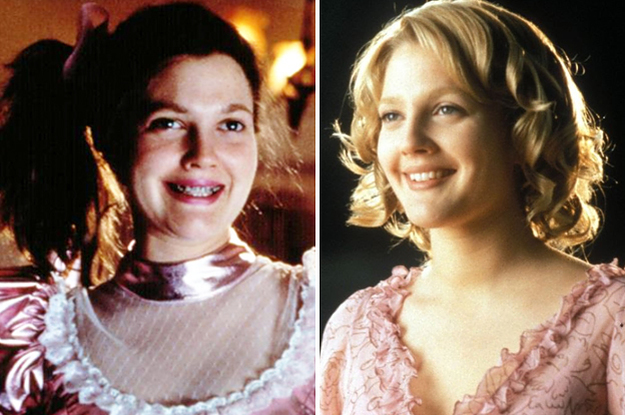


I Rewatched "Never Been Kissed" As An Adult And Oh No What Have I Done
You can't sit with us

Never Been Kissed (1999) - F


21 Jump Street for paedophiles, it’s hard to overstate how imbued Never Been Kissed is with noncery. Josie, Drew Barrymore’s socially-stunted 25-year-old copyeditor at the Chicago Sun-Times, is sent by an eccentric boss back to high school to write some undercover investigative journalism. There, Josie hopes to make amends for her own cringe-inducing high school years but finds herself struggling for acceptance once more.

All the main characters are paedophiles. Josie’s hottie tottie English teacher falls in love with her, not knowing she’s an adult, after she gives a particularly affecting reading of Shakespeare (English is all she’s good at). Josie herself fancies the school’s hottest boy; and then, out of nowhere, Josie’s brother enrols at the school in a poorly explained attempt to revive dreams of playing professional baseball and begins noncing as well.

The most bizarre bit is the English teacher’s dilemma over whether to follow his (adult) girlfriend of five years to New York (an eminently sensible decision) or to stay to nonce on one of his students. It’s presented as a legitimate choice, and we’re expected to agree with his eventual decision to try to fuck a weird child. He feels betrayed, rather than relieved, when he finds out Josie’s true age, and the tension in the final scene rests on whether he can overcome that feeling of betrayal.

Josie comes clean after she’s anointed Prom Queen, outing her brother as a paedo in the process, and then writes a hand-wringing piece for her paper where the message is, simply, plus ça change -- high school is still high school (remember, she graduated just seven years previously). You can tell we’re supposed to think it’s great because in a voiceover Josie reads it in an overwrought drama-school voice. The piece, which ends with an invitation for her nonce teacher to kiss her at a baseball game, is for some reason rapturously received as groundbreaking journalism, and the baseball game is packed. It’s hard to think of a more ridiculously plotted film.

Not funny, not an adaptation, and no breakout performances (although the soundtrack is alright) -- don’t even bother with this one.


Legally Blonde' facts - Insider
It should be illegal to be that blonde!

Legally Blonde (2001) B-


Legally Blonde arrived a bit late to the party, being released in 2001, and is set in college, not high school, as well as in professional legal settings. And while it’s technically an adaptation (of a novel released that same year), it’s not an adaptation in the way we’re looking for here. As such, it just about makes the shortlist based on its unashamed female empowerment angle; Cher Horowitz being an obvious inspiration for Elle; and credits for Reese Witherspoon, this project’s leading actor, and Kirsten Smith, its leading screenwriter (Smith also wrote 10 Things I Hate About You and She’s The Man).

You can draw a straight line between Cher Horowitz and Elle Woods (Witherspoon). Legally Blonde could be “Cher Goes to College”. Like Cher, Elle glides along on a wave of naivety, looks, and indefatigable well-meaningness, which is fun. But while Cher eventually has a personal reckoning after running into the limits of her ability to win friends and influence people, Elle just keeps on being Elle and the universe keeps on rewarding her.

Legally Blonde isn’t clear whether Elle’s actually smart: her admission to Harvard Law is partly a result of doing well in the exam but also partly a result of doing her entrance video in a bikini. Likewise, her success in the climactic hearing partially hinges on her having the lawyer’s instinct to pull on an overlooked thread in the plaintiff’s story, but it also hinges on some obscure piece of perm maintenance knowledge. Elle’s victory reminds me of how Dev Patel won out in Slumdog Millionaire -- by luckily knowing things. It’s a funny scene, but you can’t build a career as a lawyer by knowing about hair maintenance.

Or maybe I’m missing the point. Maybe I need to cut it loose from Clueless and the rest and read it as a straightforward girlpower film. Ninety minutes of Elle’s outrageous femininity swatting aside established society. But to me, that reading is too one-note.

Besides that, Legally Blonde is too much of a big studio production, with enough budget to cast the likes of Luke Wilson, Selma Blair, and Jenifer Coolidge in supporting roles.


THEN AND NOW: The cast of 'The Princess Diaries' movies 18 years ...

Princess Diaries (2001) - C


Gawky San Fran teen Mia Thermopolis (Anne Hathaway, in her breakout role) finds out she’s first in line to the throne of Genovia, a small country somewhere near Greece. Her grandmother, Julie Andrews, together with a bodyguard and a stylist, turn ugly loser Anne Hathaway into glossy princess Anne Hathaway.

Unfortunately, that’s basically it. The conceit is that Mia negotiates a two-week window to see if the proverbial shoes fit, so all the action happens within San Fran, either at high school, the consulate, or in a limousine. Given the potential of the premise, this seems restrictive and the typical high school tropes -- prom, pining after the hot boy -- felt particularly wearisome. And most of the run-time is given to Mia resolving her internal conflict, leading to a tediously static plot. I found it hard to buy into her desire to cling to her old life, too, considering she seems more comfortable around her queen grandmother anyway than among her peers at school.

Like Legally Blonde, Princess Diaries is too much of a big studio production with a broader audience in mind to rate highly here, and lacks the scrappy outsiderness that characterises the best films of the genre.


Election' Review: 1999 Movie | Hollywood Reporter
I'd vote for Reese tbh

Election (1999) A-


Had this pencilled in as a loose fit at best and was prepared for a disappointing experience. And to be honest, it is a loose fit: While it’s set in a high school and co-stars Reese Witherspoon, Election is as much about the adults’ perspectives, including Matthew Broderick’s ethically compromised but morally upright teacher, as the kids’.

However, I was absolutely not disappointed: Election is beautifully balanced, intelligent, funny, empathetic and satisfying -- it deserves a much deeper review than this. The film’s four main characters all have well-plotted, interlocking arcs, and even its antagonist, Witherspoon’s swotty Tracy Flick, is treated sympathetically. Highly recommended as a standalone film, but not necessarily as a teen movie.

(Also, unable to find this film anywhere, I eventually just typed “Election Full Movie” into Google and found a perfect quality stream on some random website -- a joyful experience in itself. Watch it here https://hdbest.net/election-1999-399.html)



Sarah Michelle Gellar posts tribute to Cruel Intentions after ...
The final film in the Reese Witherspoon extended universe

Cruel Intentions (1999) B-


Yet another Spring 1999 release (alongside Election, Never Been Kissed, and 10 Things I Hate About You -- truly this project’s goldrush), Cruel Intentions is a strong Clueless Soup albeit with some sour notes.

Cruel Intentions is adapted from Choderlos de Laclos’ 18th Century classic Les Liaisons Dangereuses -- the strongest source text of any film here -- the story of a war of love between two bored French aristocrats. Pre-revolutionary France is replaced by high-society teens in New York; Valmont (the scheming pair keep their French names) is played by Ryan Phillipe and Merteuil by Sarah Michelle Gellar. The piece’s ingenue, Cecile, is played by -- who else? -- Reese Witherspoon.

The strength of the story is hampered by bad writing. Valmont really is a complete cunt in this film, to the point that it’s hard to care when everything goes tits up for him, and he has a few untasteful lines to boot. (It’s a shame they removed original-Valmont’s “It’s beyond my control”, delivered so well by John Malkovich in the 1988 version.) Phillipe is also not in the same class of actor as Gellar and Witherspoon. Further, the importance of reputation in the plot of Les Liaisons Dangereuses doesn’t translate particularly well to the New York setting, meaning the stakes are somewhat confused.

What’s interesting about Cruel Intentions is the obviousness with which its producers have Clueless Soup in mind without quite getting it right -- aside from not being a comedy, Cruel Intentions has almost all the ingredients. This comes through most clearly in its soundtrack; a classical score was discarded late in production in favour of an alternative pop soundtrack that comes across as lazy. The almost all-British line-up features mainstream hits from the likes of Blur, The Verve, Placebo, and Fatboy Slim. The songs are so obvious that there’s no rewarding sense of “ooh I know this song!” -- everyone knows Bittersweet Symphony.

Overall, though, the plot, cast, and general vibe make Cruel Intentions a respectable entry in the canon.
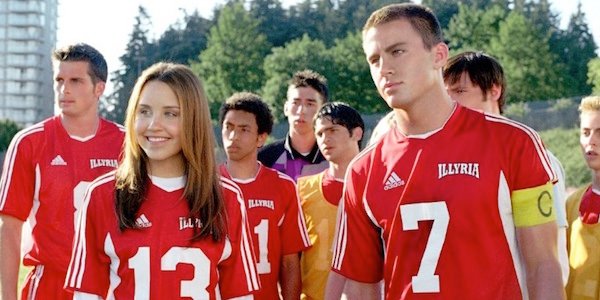


Amanda Bynes Fought For Channing Tatum's She's The Man Role ...
Channing scores on his debut

She’s The Man (2006) - B


To be honest, while I’d noted that She’s The Man was adapted from Twelfth Night in my initial research, I’d forgotten that fact by the time I got round to watching it. One difficulty of this project has been how extraordinarily unmemorable most of these films’ titles are. They’re all like, “You’re It, Girl!”, “He’s So Into You”, or “Take It All” and they all blend together. By the time I watched it, She’s The Man might as well have been about anything.

So halfway through the film's cross-dressing storyline I was thinking, these love triangles are remarkably intricate! In it, Amanda Bynes’ Violet assumes her twin brother’s identity to prove to her high school soccer coach that girls can be as good as boys. Violet falls for her new roommate (Channing Tatum in his breakthrough role) who falls for attractive classmate Olivia who in turn falls for boy-Violet. Real Violet fancies Tatum, so boy-Violet tries to engineer their coupling up. The premise is fantastic, frankly, and if you can suspend your disbelief over how obviously boy-Violet isn’t a boy* then She’s The Man has a lot to offer.

Counting against it is its release date, 2006 being a full five years after any other film in this list. However scriptwriter Kirsten Smith (10 Things I Hate About You and Legally Blonde) ensures She’s The Man has nineties bones.

*Sadly, one of the few people who couldn’t get over it was Bynes herself, who entered a six-month depression after seeing herself as a boy.
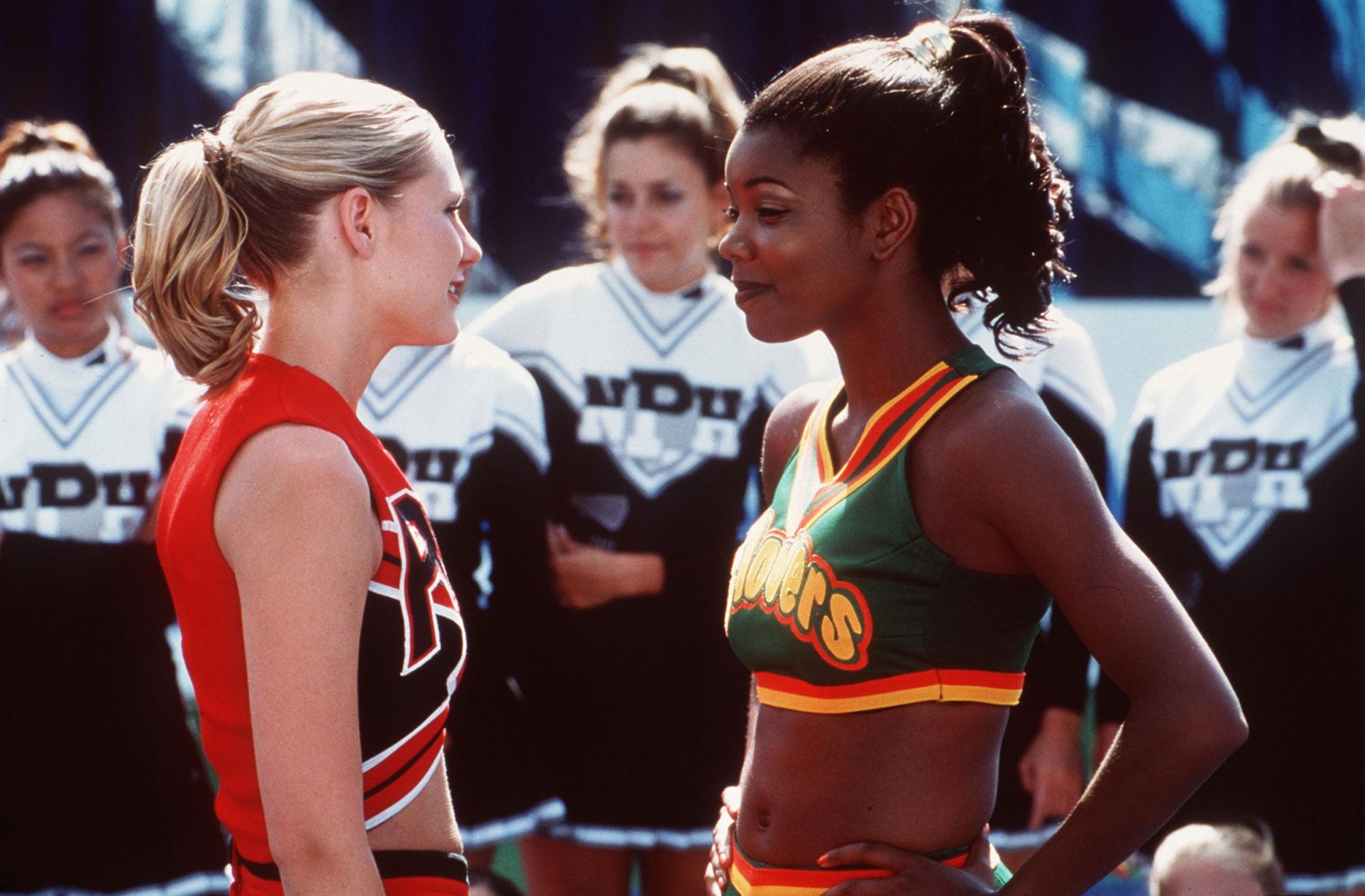


What the Cast of "Bring It On" Looks Like Now
Shipman v Isis

Bring It On (2000) - B


The definitive cheerleading film, Bring It On sees Torrance Shipman (Kirsten Dunst) struggling to lead the Rancho Carne High cheer squad to a sixth successive national title. In her way are East Compton Clover High, a talented but poor black/hispanic school from inner city LA, led by Gabrielle Union’s Isis, in her breakout role. In some ways, Bring It On is Dodgeball told from the perspective of Globo Gym.

The dynamic between the two schools is potent: Shipman discovers her school’s success is based on stealing routines from Clover High, who perennially can’t afford the entry fee for nationals. Bring It On is the first and only film of this project to probe the socioeconomics of the genre’s affluent backdrop. Stricken by guilt over her school's history of blatant exploitation, Shipman gets her dad to write a cheque to cover Clover’s fees -- but Isis refuses it and launches a fundraising appeal within the black community instead. This seems a pretty smart summary of how both the Democrats and Republicans fail black communities, with Shipman throwing corporate guilt money at the problem and Shipman’s predecessor (called “Big Red”) not giving one solitary fuck.

It’s an interesting move to make the rival school a likeable underdog, and Union upstages Dunst to such an extent that Isis actually seems like the main character in an alternate-reality version of Bring It On. The film’s internal commentary on socioeconomic relations spills out into a meta-textual discussion about why Bring It On is about the white rich school in the first place. Clover’s story is deeper than Rancho Carne’s forgettable internecine cheerleader squabbling.

Keeping Bring It On from becoming a classic of the genre are inconsistent laughs, a few scenes notwithstanding, and Dunst, who gives it a go but ultimately seems like a backup choice for when Reese Witherspoon is unavailable or too expensive.

Sidenote: Everything in this film is so oddly named. Torrance Shipman sounds like a serial killer name, Rancho Carne means meat ranch (a comment on the fuckability of cheerleaders maybe?????), Clover High is incongruously Irish-themed, and Isis has picked up certain...connotations since. Also, no character says the film’s title in full -- just “bring it”...annoying!


The only good bit. Sorry

Get Over It (2001) - D


One quirk of all these films is that, with a few notable exceptions, the women leads have ended up as stars while the men have struggled to rise out of obscurity. Maybe they’re harder to cast being at that awkward phase of development, I don’t know. Either way, it’s baffling that Ben Foster was cast in Get Over It’s leading role given his acting style is to move as few facial muscles as possible. He’ll go whole scenes only minutely moving a few lip muscles. Unsurprisingly, this does not make him easy to warm to.

Compounding matters is Shane West, already in my bad books because of Whatever It Takes, who stars opposite Foster. His character puts on an English accent for reasons unexplained and maintains it until the credits roll. Shortlist did this helpful guide to the worst British accents on film, and while West is missing, I’d put him second-worst after Josh Hartnett. Perhaps the accent is supposed to be a joke...perhaps...but the fact he maintains it for the whole thing makes me wonder if the few lines of dialogue mocking his accent weren’t hastily recorded reshoots in a desperate attempt to cover for it.

It doesn’t stop there. Poor Colin Hanks, also in Whatever It Takes, is ill-fitting and wooden as ever and noticeably bad even as a side character. The obvious nepotism makes it worse.

On the other hand, Kirsten Dunst, an absolute movie-making machine at the time, also features. And she’s good -- too good, in fact, such that you have to question the wisdom of setting her quality threshold as low as this, especially when she’s only got the fourth best role. Dunst featured in four pictures a year from 1998 to 2001, and nearly always in starring roles. Know your worth, girl!

Anyway, the plot: Ben Foster’s Burke gets dumped by his first love and he is determined to get her back -- which involves joining the cast of his high school’s production of A Midsummer Night’s Dream. Burke isn’t a natural actor so struggles when he ends up cast as Lysander...ironic! I think the plot is supposed to also be a loose retelling of the play, but it’s different enough to be confusing. There’s a rivalry, and a girl, and that’s about it.


She's All That' Remake Happening with a Diverse Cast! | Freddie ...
Last one!
She’s All That (1999) - A


Another consistent thread running through these films is their ability to defy my expectations. They’ve nearly all been markedly better -- or worse -- than anticipated. As the final Clueless Soup, I was worried She’s All That would end this project on a sour note. The title -- the most generic teen-comedy name of the lot -- some boring-looking lead actors, and a drab DVD cover didn’t scream classic. It would have been a real shame to end this thing with a Whatever It Takes.

Well thank God, because She’s All That is all that. It has a sleazy-ish conceit: After getting dumped by his popular girlfriend, Freddie Prinze Jr.’s prom king in waiting, Zach, takes a bet with his best bud Dean (Paul Walker) that he can turn any girl into the prom queen. Dean picks Laney Boggs (Rachael Leigh Cook), an outsider artist. Irritated and perplexed by his initial advance, Laney blows Zach off.

But fair play to Zach, he really commits to her, thankfully casting aside the prospect of a heartless manipulation plotline and thus diverting from the source text, George Bernard Shaw’s Pygmalion (in which a phoenetician teaches a cockney to speak and act like a lady). The romance that develops between Zach and Laney is surprisingly tender; of all the romance plotlines this is perhaps the one I felt most vested in. Good-naturedness is She’s All That’s defining tone.

Robin van Persie from the eyebrows up, Chris Evans from the nose down, Freddie Prinze Jr. proves a great leading man. The insanely petite Rachael Leigh Cook is plausible both as the overlooked girl and the princess -- a difficult balance to strike. But it’s the supporting cast, packed with future stars, that really elevates She’s All That to something memorable. Matthew Lillard puts in an amazingly goofy, physical performance as the second-rate actor that steals Zach’s girlfriend; Keiran Culkin as Laney’s little brother is in most of the funniest scenes; Paul Walker is solid as Zach’s jacked best friend-cum-rival; and flippin’ Usher is in this as the school DJ. Lil’ Kim, Anna Pacquin, Gabrielle Union and Dulé Hill also appear. The only adult character of note, Laney’s dad (Kevin Pollack), is well-written and well acted. It’s just good work all round from everybody.

And with a soundtrack that made a hit out of Kiss Me (and also features a deep cut from Black Eyed Peas’ debut album), She’s All That is a Clueless Soup for the most refined of palates.

*

Observations


Surprising fun facts you didn't know about 'Clueless' - Insider

It’s clear why high school is such a common film setting: its cliques and social structures reflect a simplified version of the real world, allowing writers to explore relationships and society in an easy-to-understand way. Despite their superficial similarities, the subject matter of these films differs markedly. You’ve got sex and power (Cruel Intentions), socioeconomics (Bring It On), hubris (Clueless), politics (Election), growing up (Princess Diaries), and class (She’s All That). The richness of setting also makes adapting classic texts relatively straightforwards.

The main weakness of the high school setting is the centrality of prom to the plotlines. I am so tired of watching prom scenes! The concept of crowning a Prom King and Queen is one of those bits of Americana that never stops being strange. You don't need to officially designate the most popular boy and girl. What kind of culture does that create! It's so stupid it doesn't work in creating tension, making it not only stupid, but boring, too. Boo!

Another thing that’s clear is how closely a film sticks to its genre blueprint has no bearing on quality: see Whatever It Takes (terrible) and Drop Dead Gorgeous (great). No surprise really, all genres have their good and their bad films. A better approach to genre is reading it as a “vibe”, a mood or a feeling sprung from a particular context. What is the Clueless vibe?

The nineties in the US under the Clinton administration was a time of optimism and stability, one borne of peace and a booming economy. But it was also a time of naivety -- prosperity allowed introspection to be kept at arm’s length. It’s into this milieu that Clueless and the films it inspired were released. Clueless is undoubtedly a good-times film, a celebration of privilege and of the winners of capitalism; wealth, more than anything, unites the characters that inhabit these films. Race feeds into it, the genre characterised by a predominant if not uniform whiteness. Only Bring It On punctures that bubble and asks whether wealth and exploitation go hand-in-hand.

Understood this way, it makes sense that the teen comedy has changed so much -- the contexts that created the Clueless genre simply don’t exist any more. The massive acceleration of social justice awareness -- and the resulting backlash -- post-financial crash disturbed the status quo, perhaps explaining why the teen comedy has been in hibernation for a decade or so. It’s hard to imagine a setting so confident in itself as to inspire a whole genre these days.

In fact, the (in my mind) two most successful teen comedies of the last decade -- 21 Jump Street and Sex Education -- speak to that confusion. Jump Street’s plot hinges on Tatum and Hill feeling out of place in a newly woke high school culture; while Sex Education is set in a US and UK high school hybrid in an indeterminate time period.

Clueless, then, is much like Cher herself: overly confident, blind to her privilege, vain, and consumerist -- but so enjoyable to be around that we can forgive any shortcomings.

Friday, 11 October 2019

"Don’t let perfect be the enemy of good."

Don’t let perfect be the enemy of good.

A truly excellent phrase, one that I’m finding out has broad utility.

In a stunning plot twist, I believe I first heard this in the corporate world. There is no domain on this earth more attuned to hollow phrases than the corporate world. There is something big to say about weasly corporate terminology – but this is not the piece for it. Instead, let’s note the irony of hearing this good phrase in a business (specifically, software development) context and move on.

-

A conversation:

“So you don’t eat beef nearly all the time but you do sometimes and you still eat pork and chicken as much as before, if not more?” Yes. “Well, it’s hard to see what you’re achieving there”.

At this point I lunge forward and press my mouth lushly against the side of this imaginary person’s head, my humid breath condensing on the inside of their outer ear structures. My contorted face reflected in a line of tiny moisture beads. I exhale the phrase, suffusing them in a warm fug. Listen here you little shit. I’m not letting perfect be the enemy of good

I’ve more or less entirely stop eating beef, the most polluting of all the meats, without too much willpower, taking a big chunk out of my CO2 emissions. (I also don’t eat tuna, or indeed much fish at all, because of overfishing). But I don’t know if I’d find eliminating chicken and pork sustainable. I really love chorizo, literally the best foodstuff, it turns you into a culinary god. If I quit pork and chicken my position on the no-meat bandwagon would feel precarious. Maybe I’ll get there eventually. But I’m happy with my current good-but-not-perfect arrangement and don’t give myself a hard time for it.

(I’ve also recently been introduced to “Quorn Chunks”, which do a very passable imitation of chicken. This could be the next step.)

-

Let’s stick with food for a bit.

A common thing that happens to people who are new to working out is that, alongside tough exercise plans, they set themselves an extremely stringent dietary regimen. Counting calories and macros, meal prepping, no sugar or processed foods – an extremely difficult diet to follow, basically. Then the siren call of a social life overwhelms their willpower and they find they’re out on the pints, smashing back a kebab, and ordering in a McDonald’s the next day because they need comforting from the throbbing headache. And they go, oh fuck it, this whole weekend’s a write-off, and the next week the diet is more difficult to stick to and before they’ve finished even one bag of protein they’re back in their old habits. A slope so slippery they should put it in Thorpe Park.

The Uber Eats man arrives at the door with a big bag of fatty, juicy, fried goodies. He extends his hand and you reach out a trembling and hungover fingers to take the bag from him. But his grip around it tightens. You tug but you’re too weak. A vein in his temple throbs and his eyes blaze with anger. He won’t let go. You’re scared. The bag abruptly rips and your food is flung in the air and scatters all over the floor.

Your chips…they say something. My god--

DON’T LET GOOD BE THE ENEMY OF PERFECT

Creepy, but—hang on, that’s weird, shouldn’t “perfect” and “good” be swapped? That makes no fuckin’ sense at all! The Uber man awkwardly rearranges the chips but by the time he’s finished the tension has dissipated and the chips don’t look appetising.

I guess my point is, as someone that goes to the gym a lot and has finished more than my share of bags of protein, I’ve learnt not to beat myself up if I have an under- or over-eating weekend. A few days of bad eating is nothing, just a few thousand extra calories. It won’t make a difference. I just get back to it.

-

When Julia Hartley-Brewer or some other awful person bloviates some nonsense on Twitter about Extinction Rebellion protesters having leather shoes, I just think, yep, that’s someone who hasn’t learnt not to let perfect be the enemy of good. Does an imperfection in an Extinction Rebellion-er’s environmental credentials weaken the movement? No. They are trying, and they are good. The same goes for any left-winger with money (or even without) who engages in capitalism. It's just a fake argument.

Maybe that’s Julia’s whole existence, someone that tried to be perfect, failed, then let it all go to shit.

-

And lastly, the only reason this blog is still going all these years later, with posts having reduced to -- at best -- two a year, is because if I don't feel like writing it doesn't faze me, knowing that it'll still be here when I do. It's not perfect; in fact, it's hard to say it's even good. But it's better than nothing at all.

Thursday, 3 October 2019

Behind the Curtain: Overstock.com, Inc.

Behind the Curtain: Overstock.com, Inc.


I love discovering outwardly normal, boring companies with strange, dark secrets. Today I found a good one.

Based in Salt Lake City, Utah, Overstock.com Inc. sells surplus furniture and other homeware at discount prices online to US millennials. Its sales have been growing at a modest pace as people aged 24-36 begin to start families and need to furnish their homes on a budget. The online retail business accounts for 99% of the company's revenue. But not quite all of it.

The remaining percent comes from a division called Medici Ventures (spooky). Medici and its main subsidiary tZERO were set up by founder and CEO Patrick Byrne within Overstock in 2014 to invest in blockchain technologies. The specifics are unclear but Overstock's filings refer to a "Government-as-a-Service" business model with six applications: identity and social media, property and land, money and banking, capital markets, supply chain, and voting; its website talks about circumventing "monolithic trust institutions". It whiffs a bit of Randian Libertarianism to me.

Going back to Overstock. Despite rising sales (up 4% to $1.8 billion in 2018) the company's profits have been declining, slowly at first but quite precipitously now. It reported a $206 million net loss in 2018, an increase on a $110 million loss in 2017.

Dig a bit into its filings and the reasons become clear. Overstock is funneling huge quantities of cash into Medici Ventures, totaling an eye-watering $210 million since its inception. Medici itself posted an operating loss of $60 million in 2018 and management expects no improvement in 2019. And despite the big investment, Medici has annual revenue of just $20 million. Like a parasite, the unit is bleeding its parent dry. Overstock's share price has tanked. Its cash levels are low and getting lower as its operations burn through cash.

At this point I thought this piece was close to its conclusion. A short sketch of a sensible and healthy company being destroyed by a weirdo's pet project.

Then I started to pull on the Patrick Byrne thread and things got strange, fast.

*

There's a lot to say about Patrick Byrne, Overstock's founder and ex-CEO. First of all, he's gigantic, sources say between 6'5" and 6'8" – and very blonde (picture Rutger Hauer and you're close). He was a good friend of an NBA player called Bison Dele (also known as Brian Williams), who died in suspicious circumstances in July 2002, and played a key role in the investigation into his death. Now in his mid-fifties, Byrne has survived cancer a couple of times. And he's passionate about Overstock and cryptocurrency. In fact, Overstock was the first major retailer to accept bitcoin.

Byrne stepped down after 20 years as CEO of Overstock in August this year and published two SEC (Securities and Exchange Commission, the US regulatory body) filings explaining why. They referred obliquely to his involvement in an investigation into Hillary Clinton, his participation in the "Deep State", some "Men in Black", the murder of Brian Williams, political espionage, and someone he calls the "Omaha Rabbi".

Byrne's statements caught the attention of the press and he was invited on Fox News to explain further. He made several long, confusing, and incoherent interviews on the channel, including one in which he sported a red Make America Grateful Again hat. Byrne claimed political espionage was conducted against Hillary Clinton, Marco Rubio, Ted Cruz, and Donald Trump in the run-up to the 2016 US Presidential Elections, but that the "apparatus of Washington will grind [him] into dust" if he came forward about it, and that he had to resign to protect Overstock. Insurers would not touch Overstock while he was in charge, he said. Byrne's sentences are rambling and often circular and he has trouble following a thought through to the end.

His composure then deteriorated, and on the brink of tears he confessed that, as an actor in the Deep State, he felt partially responsible for the wave of mass shootings sweeping the States. He claimed to have received guidance from his "rabbi" -- "a guy in Omaha" he says, (implying Warren Buffett, aka "the Oracle of Omaha") -- and took pains to downplay the involvement of the FBI, saying the investigation was hijacked from the top by the "men in black". He namechecks Peter Strzok, former head of the FBI's counterespionage unit, having concluded that Strzok was behind the orders he can't discuss by watching his congressional hearing.

It goes on.

Byrne then turned to his relationship with a woman called Maria Butina. Butina is a Russian national currently serving an 18-month jail term in the US for working on the Russian government's behalf without registering with the DoJ; in common parlance that's known as "spying". The pair met at a libertarian conference Byrne was speaking at (although he claims only partial allegiance to libertarianism but was the third largest political donator in Utah in 2000-2003). Butina was there advocating pro-gun causes and, according to the trial, creating backchannels to the Russian government that could be exploited at a later date. Butina said there were agents in Russia who wanted to talk to him. The pair began dating, broke up after about six months, and then, says Byrne, some time later he received instruction from the "Men in Black" to rekindle the romantic relationship.

Those are more or less the key themes. There's a lot to process. Is any of it true? Does it have anything to do with Medici and Overstock? Is Patrick Byrne OK?

From here, all I can do is speculate wildly. So that's what I'm going to do.

Byrne created Medici as a result of the onset of paranoid schizophrenia caused by the death of his father.

1) He has a fear of government. He outlines his politics in one of the Fox News videos as "small 'L' libertarian and a small 'R' republican", libertarians being anti-government; he refers repeatedly to the "deep state" and "men in black" conspiracy theories; makes other inferences to some kind of shadowy nexus of power within existing structures; and has claimed he "knows enough to fry to Deep State to ashes".

2) Medici's purpose seems to be escaping the reach of government and circumventing the before-mentioned "monolithic trust institutions", such as "big banks, insurance companies, and other trust institutions". Byrne has fanciful notions about Medici's (and blockchain's) potential, viewing them as revolutionary and causing him to recklessly abuse his main asset and life's work, risking its collapse. He has undoubtedly not pursued growth in Medici in a rational way.

3) His identification of former FBI man Peter Strzok as central to the espionage against Clinton, Rubio, Cruz, and Trump taps directly into the right-wing Spygate conspiracy theory. He concluded Strzok was the man giving the order was by watching his testimony and picking up on certain clues. It's easy to imagine Byrne watching a dull testimony, seeing and hearing certain familiar phrases and expressions, and using them to validate his delusion.

4) Medici was founded in 2014. Byrne's father died in 2013. Byrne's father was in insurance, a sector Byrne seems to have a particular gripe with.

What do you think?

Researching this story has been a wild ride. Who'd have guessed that a boring online discounter would lead to a deep state conspiracy, sexy Russian agents, the Quixotic pursuit of a dream, paranoia, and a dead father?

https://www.youtube.com/watch?v=T5J-1rs1LJo

https://www.si.com/longform/bison-dele/index.html

https://investors.overstock.com/news-releases/news-release-details/overstock-ceo-patrick-m-byrne-
resigns

https://investors.overstock.com/news-releases/news-release-details/overstockcom-ceo-comments-deep-state-withholds-further-comment

https://saraacarter.com/overstock-ceo-turned-over-docs-to-doj-on-fbis-russian-and-hillary-clinton-probes/

https://newrepublic.com/article/153036/maria-butina-profile-wasnt-russian-spy

Sunday, 15 April 2018

The Cat that Lost Everything


Harringay’s station cat – a white cat named Snowy – is a minor celebrity in my area. He has around 5,000 Twitter followers on an account ghost-written by an unnamed local. The account details Snowy’s life as he prowls his small dominion, chats with the local coffeeshop owners, and occasionally goes on drugs-fuelled benders. I see him almost every day.

One of Snowy's more interesting escapades

Until last weekend, when Snowy’s owners packed up and moved to Croydon, taking their famous feline with them. In a stroke Snowy became a nobody. Just a cat, unknown and unrecognized, like any other in South London.

Something about the idea of animal fame stuck with me. Fame -- where a group of humans abruptly acquires a particular interest in an individual -- is the most ridiculous of social phenomena. The people shriek when they see the famous person, follow their every move, give them money relentless. And the famous person develops various complexes, loses their freedom, becomes enormously rich, and ends up on a daytime TV show. Bizarre. But the concept (like a lot of concepts in fairness), just cannot gain traction on an animal. Animals are a-celebrity. The grip of fame on an animal is like a wet bar of soap in the shower or that coating you can put on your windscreen that makes rain just fly off. Animal celebrity is a void, a mirror, a human absurdity.

The world’s most famous cat is probably Grumpy Cat, that cat that looks sad all the time. Thanks to an extensive merchandising effort on the part of her owner, Grumpy Cat has a net worth of around $1 million apparently – more evidence that money can’t buy you happiness. She was the internet’s hottest property in 2013.


But what of the cat psyche at the centre of it all? Even humans struggle to deal with Resting Bitch Face. THAT’S JUST MY FACE, MORON!!! they yell. How would Grumpy Cat respond to the parade of people delighting at its miserable expression? I HAVE A CONDITION OKAY?? FELINE DWARFISM BITCH? U HEARD OF IT?? AT LEAST MY UNDERBITE MADE ME RICH. But of course, Grumpy Cat probably has a minimal sense of self, little idea of what it looks like, even less how it compares to other cats, and absolutely no conception of how humans respond to its mutation. The cat is essentially absent from the whole thing, the grumpy-looking black hole at the centre of a minor commercial cosmos. But unlike Snowy, Grumpy Cat is still famous and her fame will endure even beyond her eventual death.

Another famous cat I’m fond of is Famous Fred. Famous Fred is a fictional cat from one of my favourite books as a kid. His was a different dimension of fame. During the day he was an ordinary lazy housecat, but at night, after he was let out to do his business, he moonlighted as an Elvis-like hip-swinging, panty-dropping crooner cat. From amateurish beginnings, his talent blossomed, his fame escalated, and he left England on a world tour, selling out stadia and concert halls across the globe. But the fast living eventually caught up with him. His waistline grew as fast as his fame and not long after he died.


Famous Fred taps into the idea that our pets must have more complicated lives than the simple existence we provide them. We project these fantasies on what are, sentimentality aside, dumb creatures driven by a few primal instincts. Maybe that explains why Snowy has such a large twitter following and why Snowy’s ghost writer sometimes writes about his own life as Snowy. Fantasies about the hidden lives of less intelligent creatures and inanimate objects is a well-established genre – think of Toy Story, The Indian in the Cupboard, literally any film with animals in it.

An interesting aspect of Famous Fred is that Fred’s secret life seems to be real within the context of the story. Fred’s human owners* actually meet the sentient cats at Fred’s funeral (“He’s got a digital watch!”) and Fred’s hidden life has real-world consequences (his death). It seems to relish the idea that our pets could have second lives. Compare it to Toy Story, which keeps its cards closer to its chest. By making sure Andy never becomes aware that his toys are alive it preserves the possibility that the whole thing is pure fantasy. Indeed, Andy’s obliviousness is the source of much of the film’s pathos. Maybe Snowy is a closer analog to Andy than Woody, completely unaware of the adoration flung his way.

All this is swirling in my head when I think about Snowy in Croydon. And even though I know intellectually that he has zero understanding of the social dimensions of his move, deeper down I don’t believe it. I can’t truly shake the feeling that Snowy was aware of his celebrity. And that’s because, well—

All cats think they’re celebrities.

(and all dogs think you’re one.)

Goodbye Sweet Prince


* It's only the children of Fred's owners that meet Fred and the other cats, the adults stay oblivious. This plays into another trope where children have the ability to see worlds that adults can't.

Wednesday, 13 September 2017

The Library of Babel

Alright alright alright, settle down, settle down. Breathe in. Breathe out.

Your eyes aren't deceiving you. This is indeed my first blog in over a year. In fact, I’m breaking from my cardinal rule of blogging: never apologise for tardy blogging regularity. But this needs addressing because frankly what the fuck Malcolm. So I apologise. Especially to my fans, Nick, Nick, and Rob.

Why the delay? I’ve got excuses, loads of ‘em actually.

I write for a living now. I spend seven hours a day (minus ping pong time, minus coffee time, minus poo time…so like.......three hours a day) tip tap tapping away at the same laptop I’m using now, writing about companies. The content is interesting, and I’m given scope to put a sprinkling of flair into my writing too, so I don’t particularly have the inclination to do more writing when I get home. At least, that’s an excuse I’ve been using. I don’t particularly buy it to be honest -- it’s an excuse, not a reason.

Or perhaps it’s that I haven’t been feeling inspired by much recently. Last year was not a great year, maybe the worst one yet. I haven’t been reading much, gone to the cinema much, or otherwise sought out much intellectual stimulation. For a while my life has been a whole lot of work, gym, beer, PASSIVE CONSUMPTION OF SOCIAL MEDIA, sleep, work… This one feels more like a reason to me.

But I found something this week that put a spark back into my imagination.

*

Please go to libraryofbabel.info and have a look around.

In 1941, the Argentinian writer Borges wrote a short story called The Library of Babel. The story imagines a vast library of hexagonal rooms, with each wall having five shelves, each shelf housing thirty-two books, each book having 410 pages, and each page forty lines of eighty random letters or spaces. Each book therefore contains 1,312,000 characters.

The books collected in the library contain every possible combination of those 1,312,000 characters with no repeats. The number of books is thus unimaginably large, and in that epic library you can somewhere find the complete works of Shakespeare...backwards. Or the complete works of Shakespeare where all the characters are called “Buttface”. Or everything you’ve ever said out loud in chronological order. Literally…everything that has ever been written or ever will be written. Of course, given the unimaginable size of the library, all the good stuff is swallowed by infinite reams of absolute nonsense. The chance of picking a book at random and looking for even half a sentence of coherent text is a Planck length above zero.

Kind of a weird but neat idea right?

The website I linked a couple of paragraphs up is one man’s – Jonathan Basile’s -- attempt to recreate Borges’ Library of Babel. There's some clever maths and computing behind it that I don't understand, but it doesn't simply create a page every time someone searches. Every page has a consistent location. Basile has created Borges' library.

Go to the Search page and stick something into the box. Mash the keyboard. Tell it your heart’s desires. Insult your friends. Put in Romeo & Juliet but with the fated lovers both called Buttface. And marvel at how each time it returns your exact input. From each page of white noise your phrase emerges eerily.

*

It took me a while to get my head around it. That website has everything on it. It has a description of my entire life on there, and yours, and everyone’s. It has every book, song, poem, scientific paper…all of it. There’s a sense of touching pure, raw information. It evokes the strongest feelings of curiosity in me, as everything I could ever want to know is in there somewhere.

But that curiosity is a melancholic one because everything useful is out of reach. You realise it's a massive, impenetrable wall of noise. It can only repeat, never speak of its own accord.

And as you get accustomed to that idea, the maths of the thing starts to overtake the poetry of it. The library starts to feel mundane. It’s a pure experiment in mathematics, an exercise in tedious number crunching. It’s irritatingly logical, a frustrating rush of uncontrolled, indigestible information.

There’s also something smirking about the way it’s one step ahead of you, it already knows everything you want but deigns not to reach out a guiding hand.

I mean, why did I even bother writing this blog post? You can find the whole damn thing on that website already. On Browse, put in these details

Hex (I made the text really small so doesn’t look ridiculous on the page, just copy all of it):
2zq2uknk5f6exyk9m7un7iyne00p0crxiz80sy6axgxtb0t6st9vjbehk0q16i0v7ohnar7a26zn1utx8gmh1nfimls22w91r1e0gzegxor0hg33h4vv4uvdrrwqb0qukfou59kui91tv0esmgput1cv97oklf071ln9v88zavk4pi4vxlpwqxuncizc26d66d887d5rwhvqc3idv7viuxhlnco6h3u29afuf45d9f6pqoypra485zfi3fz265uluapswpf6vd67mzfaf5jme68l26f6f2sqgk7k0ps28h798loywt9lmd0otmnrpj7tbex6jvcit8eh5enbn06vyohmf07yikcph7q7l643lr3itiqrd2rhhxerexq4nfl5dq9kv01wiaggu7enr9x3s3f7d88f8wvoq0y8g4tovrzhoec0yoeoynb71s3pxhkhnfjtmzqc8sc4xxmremutzybhl1s414ry0yz1bmnheeuh39ryov7yozqpgalz6attlyugj6w0nq21nh86smdt9fdjar808n4q5ojnhk44w8t83q25dex40ccy79ryhzq2uuysucczlwru0a5tgeeflmmicsfyvn77x5ha54fbtej1ca1wprrjqqwpz755z8142b8rocuhce4etoczetv72njthdu51hczuqz4dc2ygjex6hx6ml3zycdkmbwy4wdm753c5u8js45vfdknmw9zcvvrmq43baw50i3qd8zpejnwm3ywduen594kvcu7r9fu4tpzbp55w7v4hm9nzrraji3dokd595xv2qzharxzrjupxbk53ah9ido3t8qq9g3lhkhszofeoxwasm756ieacv07mkya8z54dqhjc6ksyhyo3t5sm7832zy2q2ehf1jjbny9mxx7jlwashzja4ujmttzg5w13zqniumdgw8fusyze952crbk9wjhh9l90zxneu62vyrt2pfuvfirx8i3s801zre7k21x0izgh5e3d50isxubqa78qug4k6gpom7vdldee8sxhjzpldv9od5gbdi7ovlmq2bx0enxl7pwesx0jwz47z9ryfpng64sij1ig7kssrh7e7kjp2injphyx21ripa8jhcntr1vdme498uisn174ckphjtsnahordac8lgy0vbyuefxs3vuitx82bk68ah8o644r9glia793z8wt5hej4sj6eby1kl0zn0ko2185833in2jq48voa3zjm7ilywhjkc176fme8nwkajn8fgwcp7muzc060xzf10n1er4vlrsmulhz2gpw21o1uw7enptra7aiqyb1gwh8js9pr9h11jxzzu8vr1x96lhhb8nb81l36ac6amwfrunfvzs9pvshbfbcoikq488g22uul8804jv4lzdjp9k1ywl3kfwwzlkso3zjuivg8rlvjhovbwz81tr2e9r73856qlrk6ijpqr48k4jbmmjmyop1352ycggsuu83y90ehc4wwmdmtxhewuiqo190l3f707k74aovxknuggcxzu63jlqpozthizh8nlv1uo6kp0alohdhwndej6jjc1yhnhvwqg4ra0ilxjomuuuyewdiv97yfxbczi8ax2rn4wevwlgo4ld1gxs6n9acvg5xh6l14btiwif7dkfcmg0zqrlmsncpzrk3zupxe3kkkho5oqiax6zl1epg2z0fevqcw4v2fzggi81r2ps7957utroq9860is39ph64o99fcasqxm609lx3yqdx787te5ux3x25ha7p3ww04j1gwf24d5d3bmxttgy1g2cg0a4xkloq9lod0v0h1kgk9fmv788utk6o99gtlbskvtde8t67fk8vgryirvyejv3lu8dbcvogqhcm1trwge5bgfjdwh4xzsy55g8i5977g887zgfk9f4c2oq0k13ttx4k6702oyii35l69y2lwv2bdouw8hwjeutnjfh9qn749sakkq7mp0nruww373uswzqppawg6tlez6g9rob70qgcazfmynklll9mxmutxilragpvwnrr0kujr2cgx0fvrn9xu019d1vacrjmr3rrtbgm3xlpnmo2ubjad15f055z3da3j5ele43csm1umm1m05f824z2ss415mvvwxl3xxwlk5rn2y9bgom18ktr19qw79urldi8c36g8fmqq39w9rzofo0xviub14k6jp1ubxwr8cw5spr6rjm9hqw6asjolika9qoe5a4xld4wf6a0nfxyl5cyw15zlsytqxcf1zufaqn6s4zftu42hzif46i54ih6xa6o68sajxjqml67kjcwl6m0z0wnum1djnllvq18xmyzpghdfmtu3p7la4fcwvvbtdeg3w3a6o32ak8v5m8g52ytb98b7alz8izyifnmwj88tfeehp6m18gdcq46h8kwjvpcx0yotz85t8dj0d779hs9xub6hz8iwp71etxtldanp2o1bqlsyc2z50p9se2wdtwba6zp15fs8a746cmjlcvp8mcp8b48i3fbchc64oq7pngvc275yn2n31q1chbogl735yvs1t7fl9akzof6hbrhlvu367lq7nc4u9aitqffls7cqf99sb9tevzo6nfdd5bm13nbfzamm6m7j5wabbtinvemtusb93ql0iafz1aj7hxpwxibhvmi6e3ndldh2t2niqo5zrs4esg4pa3w9uvebgsz0kqh0rdxzs9dufx5evw1szl46ymjg6a8lx0hixfb5df31ddmai5qix3mtbobl7bo3orswf88zu546vfupqdooplv7e64bqym0hr8jgvy145x2n3p4mmadpc793hv1ypl8wfsln2qo0ey5qdntmaqcjbuptnmhmu52vpznjwf5y3ib4vctijf2gn9j9vjwcasa4vd3ri30yflo3stc64rvodpajmcx9bds26miqijwojfr2ghfll8009p32t4jsvc0q7fwfy3jz12y8ul8rywgjde5d6x93snzmy1rrvgn0ssljox7ybznxlp225qw24rqwu6d0g9315rd18eha3sw1my5zfzkiw6qjqb80jfk7ioi2iz8v33pjqn60ooe6dsyl0wt6dx5us1274iidbj54b720vha7icb2yhww03hcx83yflulgqri2di6pbojv7xjhcs80em0qe6h83j44knw9c6zy5cy9fpnpp6leyaoy0xum29w15ansvsedcwv5xgmnu0qhtn26tu1szk5sd67dymjfmyy9711vc6
Wall 2
Shelf 2
Volume 3
Page 118

And there it is. Isn’t it glorious.

Saturday, 10 September 2016

All Companies Sell Solutions Now And It's Weird

I write about companies and business now. I know, right? – weird. How has that happened? Not only do I not know anything about business whatsoever (I mean, I’ve done some brushing up since, but when I started: no), I also try and nurture a healthy scepticism of capitalist enterprise.

So with capitalism having kicked up a notch since 9/11 and the 2008 financial crisis [citation needed], it’s interesting to see how companies are working hard to efface their identities as overtly capitalist makers and buyers and sellers of things, in favour of something approaching charity.

All companies solve problems now. The things they sell are no longer products but “solutions”. We’re here to help people, and make your life easier, they say, lots of eye contact, hand on knee. And if we make some money from it at the same time well that’s rather nice. Why tho? Is it supposed to distract from all the shady activities companies conduct? Is it a guilt thing? Is it just a corporate fad?

The approach, creepy as it is, works without sounding too weird for companies in the service industry for instance, but when companies in other industries that sell literal physical things bend over backwards to position their wares as solutions, it becomes strange and hilarious.

Over the past few months I’ve curated a collection of the best examples and put them in a quiz format. I’ve removed all the company names, and for each, try and work out what they actually do from the description.


  1. [This company] assists industries in finding and implementing ever more responsible and value-creating solutions. Our products serve diversified markets, from consumer goods to energy, with one main aim – to improve quality of life and customer performance.
  2. We are the ones who help your application landscapes become flexible and productive. We take responsibility for the entire lifecycle of your applications from development to maintenance, while working with you to simplify your landscape.
  3. Inventing, designing and producing high quality solutions for customers and patients, [company] offers products that are designed with patients’ needs in mind.
  4. [Company] is a globally diversified natural resources company with low cost operations. We empower our people to drive excellence and innovation to create value for our stakeholders. We demonstrate world-class standards of governance, safety, sustainability, and social responsibility. At [Company], our people are our most important assets. We actively encourage their development and support them in pursuing their goals.
  5. [This company] is a leading sleep solution destination.


Answers

  1. This company is a fucking gigantic chemical group
  2. Why does a massive IT group have such an obsession with landscape gardening?
  3. This lot sell gases used in healthcare
  4. A mining company
  5. A bed company. This company sells beds. For fucksake.